





Dew point
Air will generally include moisture in the form of water vapour.
Relative humidity (RH) is a measure of the water vapour density of air compared to the water vapour density for saturated air at the same temperature and pressure (that is, the maximum amount of moisture that air can “hold” at that temperature and pressure). It is expressed as a percentage.
RH = (actual water vapour density / saturation water vapour density) x 100
When air cools, it is less able to “hold” moisture, that is, the saturation water vapour density falls, and so relative humidity rises. When the relative humidity reaches 100%, the air will be saturated. This is described as the ‘dew point’ temperature, or the ‘saturation temperature’. If the air continues to cool, moisture will begin to condense. Where this condensate forms on a surface, it can be described as ‘dew’, hence the term ‘dew point’.
Understanding this phenomena is important in the design and construction of new buildings, and in the assessment of existing buildings, as the formation of condensation can be damaging, can affect comfort and can be a hazard to health.
Surface condensation occurs where water condenses on the exposed internal surfaces of a building, such as ‘cold’ windows.
Interstitial condensation occurs when the dew point temperature is reached within the fabric of the building, either on the surfaces of components that make up the fabric, or sometimes within the components themselves.
Condensation can cause:
- Mould growth which is a cause of respiratory allergies.
- Mildew.
- Staining.
- Corrosion and decay of the building fabric.
- Frost damage
- Poor performance of insulation.
- Damage to equipment.
- Slip hazards.
Software is available to help calculate dew points, particularly in relation to interstitial condensation, the position of which within the building fabric is crucial if potential problems are to be avoided.
[edit] Related articles on Designing Buildings
- Cavity wall.
- Cold bridge.
- Condensation.
- Dehumidification.
- Deliquescence point.
- Diagnosing the causes of dampness (GR 5 revised).
- Dry-bulb temperature.
- Humidity.
- Insulation specification.
- Interstitial condensation.
- Moisture.
- Psychometric chart.
- Saturation.
- Sling psychrometer.
- Solid wall insulation.
- Thermal comfort.
- Thermal indices.
- Temperature.
- Understanding dampness.
- Water vapour.
- Wet-bulb temperature.
Featured articles
Check out some of the best features and news from Designing Buildings as well as key stories from around the web.
Building Regulations and Building Safety Act

CIOB publishes free advice for non-domestic clients.

Building Safety Newsletter from MHCLG.
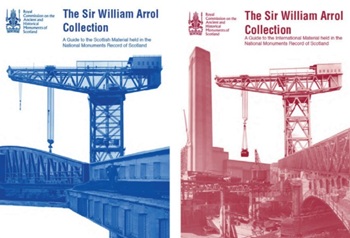
An extraordinary record of steel engineering worldwide.

Households living near new pylons to save on bills.

ECA warns growth must not outpace grid capacity or skills.
The role of the client and decision making

CIOB response to built environment professions call for evidence.
Construction's sustainability reporting revolution
Tracking upfront embodied carbon with digital tools.
ECA welcomes procurement reforms

Public spending must back British jobs and skills.
Campaigning for Edinburgh: the Cockburn Association 1875-2049

The role of the civic voice in protecting character. Book review.
CIOB photography competition is open for entries.
ECA Edmundson apprentice of the year award

Finalists announced.
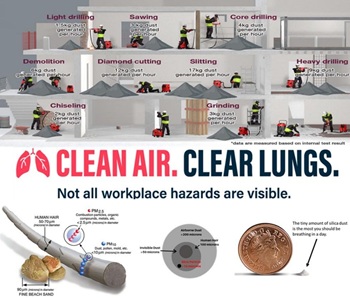
Major new study exposes serious knowledge gaps.